A673 CDX Model

Advancing Bone and Sarcoma Cancer Research Through Robust In Vivo Model

Bone cancers and soft tissue sarcomas represent a diverse group of rare malignancies arising from mesenchymal tissues including bone, muscle, fat, cartilage, and connective tissue. Although collectively uncommon compared with epithelial cancers such as lung, breast, or colorectal cancer, sarcomas encompass more than 70 distinct histological subtypes, each characterized by unique molecular drivers, disease progression patterns, and therapeutic vulnerabilities.

Osteosarcoma and Ewing sarcoma are among the most clinically significant bone sarcomas, primarily affecting pediatric and young adult populations. Despite advances in surgery, chemotherapy, and radiation therapy, outcomes remain poor for patients with metastatic or recurrent disease.

The rarity and biological heterogeneity of these cancers continue to present challenges for drug development. Consequently, translational research relies heavily on predictive preclinical models that accurately recapitulate tumor biology, and therapeutic response.

The Importance of In Vivo Models in Sarcoma Drug Discovery

A673: A Benchmark Model for Ewing Sarcoma Research

The A673 cell line is one of the most widely utilized models for Ewing sarcoma research. Derived from a human Ewing sarcoma tumor, A673 cells harbor the hallmark EWSR1-FLI1 fusion oncogene that drives disease pathogenesis.

A673 CDX Model

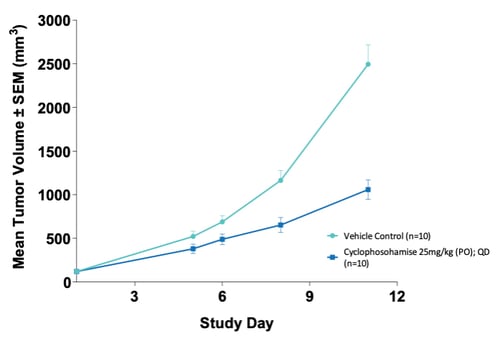
Subcutaneous Mean Tumor Growth: A673M Human Ewing Sarcoma in Female NSG mice
A673 CDX Model

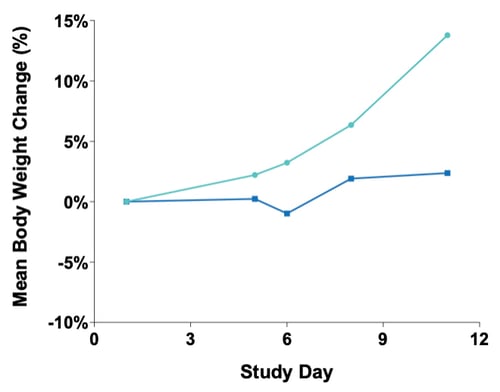
Mean Body Weigh Change: A673M Human Ewing Sarcoma in Female NSG mice

Because EWSR1-FLI1 functions as the primary oncogenic driver, A673 models provide researchers with a biologically relevant platform for testing mechanism-based therapeutics designed to disrupt Ewing sarcoma signaling networks.

K7M2: A Metastatic Syngeneic Osteosarcoma Model

Among available osteosarcoma models, K7M2 occupies a unique position due to its highly metastatic nature and compatibility with immunocompetent mouse systems.

Derived from murine osteosarcoma, K7M2-Luc cells are injected (IV) into BALB/c mice, creating a fully immunocompetent disease system.

A673 CDX Model

Metastatic Mean BLI Growth: K7M2-Luc Murine Osteosarcoma in Female Balb/c mice

A673 CDX Model

Mean Body Weigh Change: K7M2-Luc Murine Osteosarcoma in Female Balb/c mice

Because immune interactions play a critical role in osteosarcoma progression, K7M2-luc provides an important bridge between traditional efficacy studies and modern immuno-oncology research.

Future Directions

The next generation of sarcoma drug discovery is increasingly focused on combining traditional efficacy models with advanced technologies such as patient-derived xenografts (PDX), organoids, spatial biology, single-cell sequencing, and immune profiling. These approaches are providing deeper insights into tumor heterogeneity, metastatic evolution, and treatment resistance.

As precision medicine continues to transform oncology, robust in vivo models such as A673, and K7M2-Luc remain critical tools for translating promising scientific discoveries into effective therapies for patients with bone and soft tissue sarcomas.

Request Additional CDX Model Data

CONTACT US

Get Started.

Have questions about how TD2 can assist with your regulatory needs? Reach out to our expert staff today to get started.